
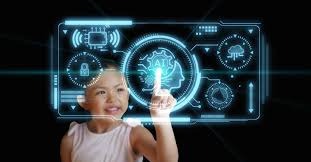
The rapid integration of artificial intelligence into virtually every sector of society is transforming the skills and knowledge students need to thrive in their future careers and lives. Modern education must evolve to prepare learners for this AI-augmented reality, developing not only traditional academic competencies but also new literacies specific to an automated world. Tools like the AI Homework Helper serve a dual purpose in this evolution—both supporting current learning and familiarizing students with AI collaboration, a skill that will prove invaluable throughout their lives.
AI literacy—the ability to understand, critically evaluate, and effectively collaborate with artificial intelligence systems—has emerged as an essential competency for the 21st century. Students need to comprehend AI’s fundamental capabilities and limitations, recognizing what these systems can do well and where human judgment remains superior. This understanding prevents both over-reliance on AI and dismissal of its potential value, enabling students to form productive partnerships with these technologies throughout their academic and professional journeys.
The critical evaluation of AI-generated content represents another crucial skill. As AI systems produce increasingly sophisticated text, images, and data analyses, students must develop the ability to assess this information’s accuracy, reliability, and potential biases. This critical stance applies not only to content created by others but also to outputs from AI tools they use themselves. Teaching students to verify AI-produced information against multiple sources and to consider the limitations of the algorithms involved prepares them for a world where distinguishing reliable information from misinformation becomes increasingly challenging.
Effective prompting—the ability to provide clear, specific instructions to AI systems—has emerged as a valuable skill in itself. Students who can articulate their needs precisely receive more useful AI assistance than those who provide vague or ambiguous prompts. This skill transfers directly to professional contexts where collaborating with AI tools is becoming commonplace, from marketing to healthcare to engineering. Educational settings provide an ideal environment for developing these prompting abilities, with guidance and feedback that helps students refine their approach.
Ethical considerations surrounding AI use require careful attention in educational contexts. Students must understand issues of attribution, transparency, and appropriate reliance on AI assistance. When is it acceptable to use AI tools for various academic tasks? How should such use be acknowledged? How can students ensure they’re developing their own skills while leveraging AI support? Addressing these questions explicitly helps students navigate the ethical complexities of a technology that blurs traditional boundaries between assistance and independent work.
The metacognitive awareness fostered by thoughtful AI integration represents one of its most valuable educational benefits. When students interact with AI systems that explain their reasoning, they gain insight into different approaches to problem-solving. This exposure to alternative thinking patterns can enhance students’ awareness of their own cognitive processes and expand their problem-solving repertoire. The most effective educational implementations leverage this potential by encouraging reflection on both the AI’s approach and the student’s own thinking.
Human-AI collaboration skills extend beyond academic contexts into virtually every professional field. Today’s students will work alongside AI throughout their careers, delegating certain tasks while retaining control over others. Learning when to rely on AI and when to trust human judgment develops decision-making capacities that transfer across domains. Educational settings provide a controlled environment for developing these collaborative relationships, with guidance that helps students understand appropriate delegation and oversight.
Adaptability in the face of technological change has become an essential quality in modern workplaces. AI systems continue to evolve rapidly, with capabilities expanding into new domains. Students who become comfortable with this ongoing transformation—seeing it as an opportunity rather than a threat—develop resilience that serves them well throughout their lives. Education can foster this adaptability by normalizing technological evolution and teaching students to approach new tools with curiosity rather than apprehension.
The development of distinctly human capabilities gains new importance in an AI-integrated world. As machines take on more routine cognitive tasks, qualities like creativity, ethical reasoning, emotional intelligence, and collaborative problem-solving become increasingly valuable. Educational approaches that emphasize these uniquely human strengths prepare students not to compete with AI but to complement it, focusing their development on areas where humans continue to excel.
Digital citizenship takes on new dimensions with AI integration, extending beyond responsible online behavior to include ethical considerations about automation’s societal impacts. Students should understand how AI systems can affect employment patterns, privacy, security, and social equity. This broader awareness prepares them to participate thoughtfully in public discourse about technology policy and to make informed decisions about AI implementation in their future professional roles.
The global dimension of AI literacy cannot be overlooked. Different regions and cultures approach AI with varying perspectives on privacy, autonomy, and appropriate technological boundaries. Students prepared for an international landscape must understand these cultural variations, recognizing how AI implementations might need to adapt to different contexts. This cultural awareness supports both ethical technology development and effective cross-cultural collaboration in an increasingly connected world.
Educational institutions themselves must model thoughtful AI integration, demonstrating both its benefits and its limitations. When schools implement AI tools transparently, acknowledging both successes and challenges, they provide valuable real-world examples of technology assessment and adaptation. This institutional modeling helps students develop nuanced perspectives on technological adoption, avoiding both uncritical enthusiasm and reflexive resistance.
In conclusion, preparing students for an AI-integrated future requires developing new literacies that go beyond traditional academic competencies. By fostering AI literacy, critical evaluation skills, effective prompting abilities, ethical awareness, metacognitive reflection, collaborative capabilities, adaptability, distinctly human strengths, comprehensive digital citizenship, and global perspectives, education can ensure that students thrive in a world where human-AI collaboration becomes increasingly central to both professional success and civic participation.